By Aaron Wolf, Ph.D., Science Communications at Ancestry
Ancestral journeys in AncestryDNA pinpoint the specific locations where your ancestors may have lived and moved in the past 50-300 years. Journeys can connect you to stories and records about who your ancestors were and what their lives were like.
But, if you don’t know which side of your family connects you to a specific journey, making discoveries can be tricky. How can you start searching marriage records in a city or town if you don’t know what surnames to look for?
That’s why AncestryDNA developed Journeys by parent, a new way to see which parent connects you to each of your journeys. We can do this without your parents even taking a DNA test!
First, we organize your DNA matches by parental side using SideView™ Technology. Then, we use those matches to show you your journeys. If the matches that connect you to a journey come from one parent more than the other, you probably inherited that journey from that parent.
Now, you can see even more detail about your DNA and take your family history discovery to the next level.
Assigning journeys from DNA matches
We find journeys by looking for groups of people with more matches to each other than to the rest of the database. We use these people as a reference panel for that journey.
To connect you to a journey, we look at how many matches you have to individuals in that reference panel (and how close those matches are).
We feed that information into an assignment algorithm, called a “classifier”. This algorithm looks at the number of matches you have with the reference panel and the closeness of that relationship. Then, it determines if there is enough genetic evidence to connect you with that journey. (Interested in more details? Read our white paper.)
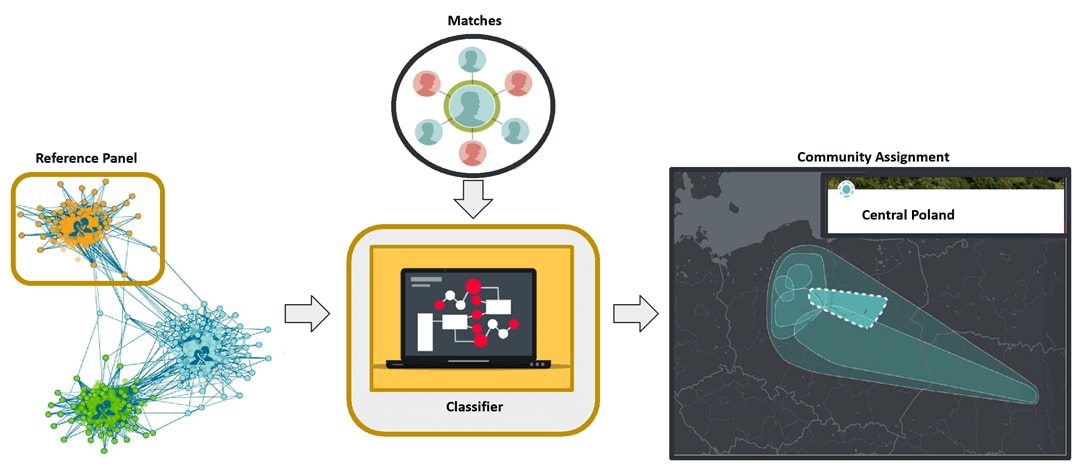
Figure 1. Journeys are defined by a reference panel of closely related people and an assignment classifier. The journey reference panel is made up of people with more matches to each other than the rest of the database. That information is fed into an assignment classifier. The classifier looks at a person’s number of matches with the reference panel to determine if that person should be assigned to the journey.
Organizing your matches with SideView™
We can connect you to a journey using your matches, but how can we tell which parent you inherited that journey from?
That process begins with our SideView™ technology, which splits your DNA into the halves inherited from each parent. Remember, you inherited half of your DNA from each of your parents. But when we first read your DNA, we can’t tell which parts of your DNA came from which parent.
To sort this out, SideView™ uses your DNA matches. Because a match is usually related to you through only one parent, your matches can help us “organize” the DNA you share with them. You can think of them like magnets that separate your DNA into the halves inherited from each parent.
As we separate your DNA into the two parental halves, we keep track of which matches are connected to each parental side.

Figure 2. SideView™ uses your DNA matches to separate your DNA (purple bar) into the halves inherited from each parent—labeled Parent 1 (blue) and Parent 2 (green).
Figuring out which parent connects you to each journey
Once your matches are organized by the parental side, there’s only one more step to determine which parent connects you to each journey.
Remember, each journey is defined by a set of people who make up a reference panel, and assigning you to a journey is based on how many close matches you have to people in that reference panel.
Since we now know which of your matches are associated with each parental side, we can see if the matches that connect you to a journey come from one parent more than the other. If that is the case, you’re probably connected to that journey through that parent.
It’s also possible to be connected to a journey through both parents. This means you likely have ancestors from that journey on both sides of your family. This could be the case if there is a marriage between close relatives in your family tree. Or it can occur if part of your ancestry is from a population with a history of endogamy.
Sometimes, we can’t tell which parent connects you to a journey. This is often because you didn’t inherit enough matches from either parent alone for the journey classifier to confidently make a decision.
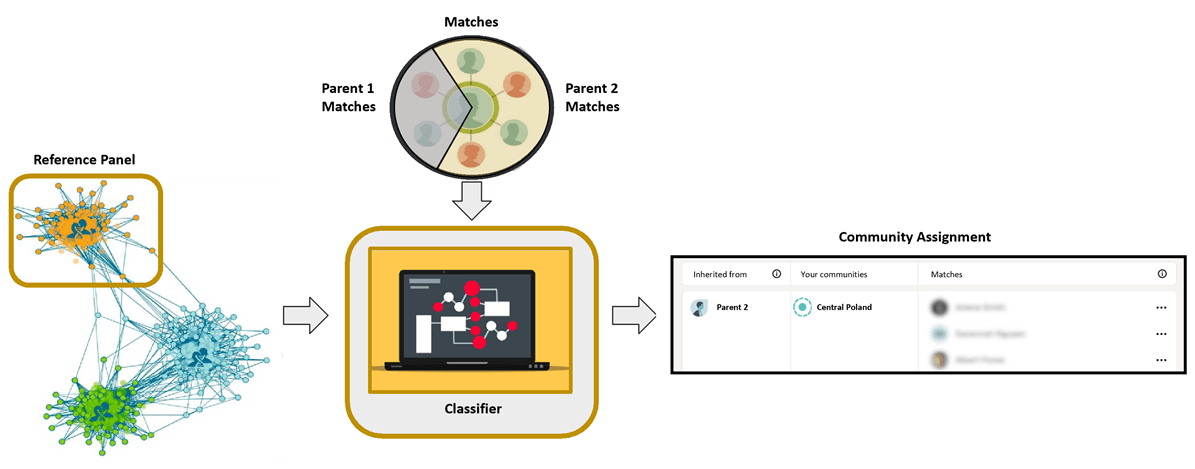
Figure 3. Journeys by parent compares matches from one parental side at a time to the reference panel. Using SideView™, we can separate your matches by parental side. Then, we can see if the matches that connect you to a journey come from one parent more than the other. If that is the case, you’re probably connected to that journey through that parent.
Building journeys for the future
Scientists at Ancestry are committed to discovering new ancestral journeys for our members. Because discovering journeys requires combining information from member trees and DNA results, the power of our predictions relies on the data we get from our members.
You can help us discover new ancestral journeys by documenting your family tree.
And if you want to learn more about how we discover new journeys, check out our white paper.