By Natalie Swinford, Ph.D, Ancestry Human Genetic Diversity Scientist
If your family has lived in southern Africa for generations, you may expect to see Southern Bantu Peoples in your origins results. Even if you expect to have 100% Southern Bantu Peoples, you may have up to 33% other Bantu regions or the Khoisan, Aka, & Mbuti Peoples region.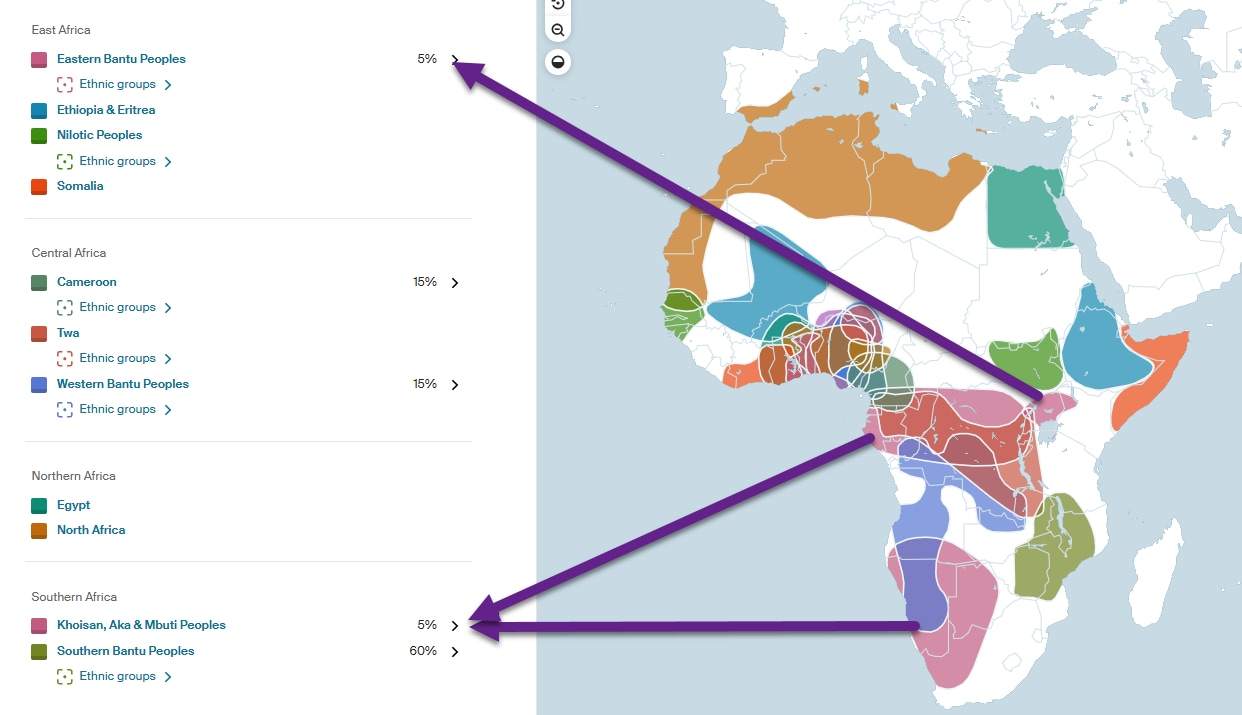
Figure 1. People with roots back to southern Bantu populations will likely also see some connection to western and eastern Bantu populations and Khoisan people in their origins results.
Human history is full of population movements and migrations that are reflected in our DNA. Evidence of these migrations can often be seen in your origins results when additional regions are observed in results. The appearance of these other African regions in the example above demonstrates this perfectly.
The Bantu Expansion into Southern Africa
The Bantu-speaking populations of southern Africa have a rich history of migration. Although southern African Bantu-speaking populations have lived in southern Africa for hundreds of years, their ancestors came from western Africa.
Around 4,000 years ago, Bantu-speaking populations spread across Sub-Saharan Africa from the southern part of West Africa (around modern-day Cameroon). Some migrated down the western coast of Africa, while others cut across central Africa and moved southward along a more eastern route. By about 1,400 years ago, these Bantu-speaking people reached southern Africa. There they encountered the indigenous Khoisan hunter-gatherers.
Figure 2. A diagram of the Bantu Expansion, occurring around 4,000 years ago. Bantu-speaking populations spread from West Africa (around modern-day Cameroon) across Sub-Saharan Africa. They reached southern Africa about 1,400 years ago.
Researchers can see evidence of this historic migration in language and artifacts. The Bantu-speaking people brought agricultural practices with them. Distinctive Bantu pottery, along with polished stone axes and hoes, can be found along their migration route.
We can also see traces of this migration in the DNA of people living today.
How the Bantu Expansion shaped DNA
Today, Bantu-speaking populations reside throughout sub-Saharan Africa along the routes their ancestors journeyed. This migration across Africa has left traces in the DNA of southern Africans.
Individuals with deep roots in southern Africa often share DNA with Southern Bantu-speaking peoples. However, these Southern Bantu peoples also share a common origin with other Bantu populations, all of which have ancestors who expanded out of the Cameroon and Mali region of western Africa.
Because of the shared history of Bantu migration, it’s typical for southern African individuals to see other Bantu populations — like Cameroon and Western Bantu Peoples, or Eastern Bantu Peoples — in their ancestral regions.
As Bantu-speaking agriculturalists moved into new areas, they had children with local populations like the Khoisan. Today, we can still see evidence of this in the DNA of people from South Africa. People with a very high percentage to one or several of our Bantu regions may also see some percentage of Khoisan, Aka, & Mbuti Peoples in their results. This pattern reflects ancestral ties to both the indigenous Khoisan and the Bantu-speaking populations who encountered them.
Learn more about DNA and Family History
Even if your family has lived in South Africa for generations or you identify with a specific southern Bantu ethnic group such as Tsonga or Xhosa, you may find your DNA connects you to other Bantu groups or local indigenous populations. It can be surprising, but it reflects centuries of shared history between Bantu-speaking peoples and populations in southern Africa.
Learning more about your history through DNA is exciting! As described above, origins results can reveal new information about your ancestors, but there are other ways to dive deeper into your family’s history. The best place to start is by building a family tree. You can also explore your DNA matches and ancestral journey to learn more about your recent family history.