By Natalie Swinford, Ph.D., Ancestry Human Genetic Diversity Scientist
If your family has deep roots in South Africa, you may expect to see African and European origins in your ancestral origins results.
But, you may also discover some Asian roots. South Africans may have up to 30% of their ethnicity from Southern India, Southeast Asia, Southern Philippines, or other similar regions.
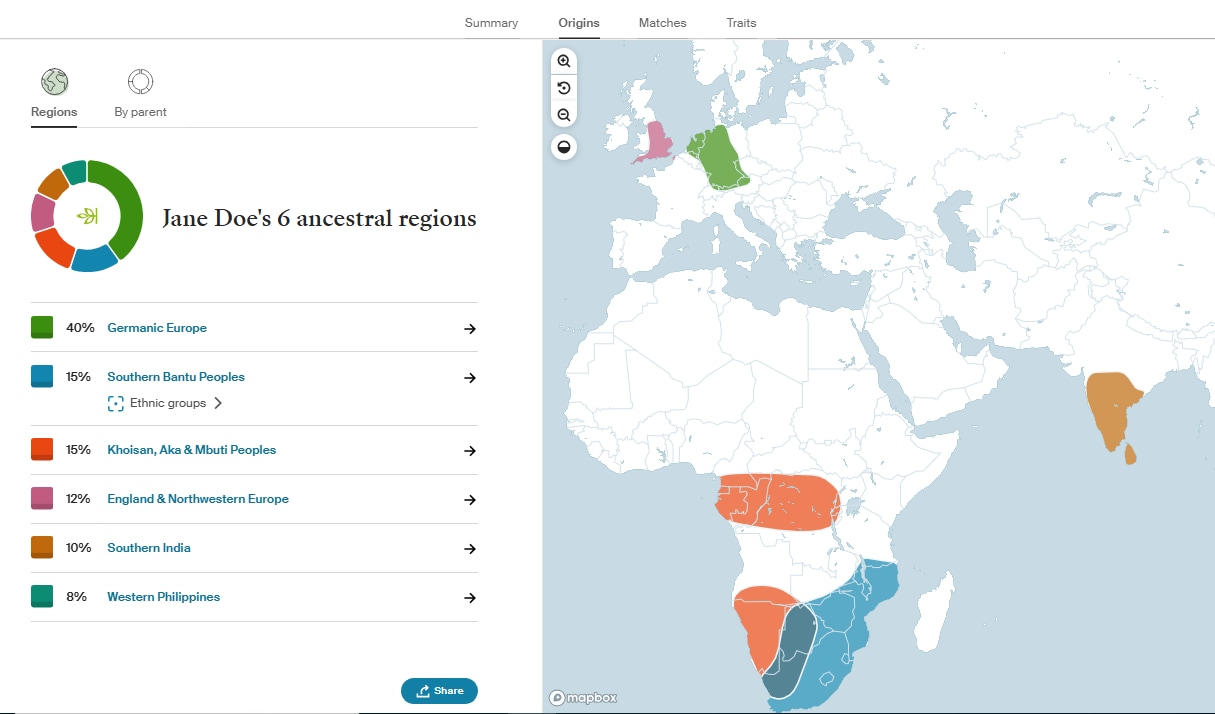
Figure 1. People with deep family roots in South Africa often see regions from global populations in Africa, Europe, and Asia.
There is a long history of South and Southeast Asian peoples in South Africa. And these people’s presence (and mixing) can still be seen in our DNA today.
Enslaved people brought from Asia to South Africa
In 1652, The Dutch East India Company (VOC) founded the Cape of Good Hope (known today as Cape Town) on the southwestern coast of South Africa. The Cape of Good Hope served as a trading outpost on the routes between Europe and Indonesia (Figure 2). The following year, the Dutch began moving the first enslaved people from Southeast Asia into South Africa.
Over the following decades, Dutch people settled on the Cape to produce food for trade with the Dutch East India Company. These Europeans were originally referred to as “free burghers” and their descendants became known as Boers and Afrikaners.
As more farmers settled, indigenous Khoekhoe people (represented in the AncestryDNA region Khoisan, Aka, & Mbuti) were displaced from the land they used to graze their herds and many were forced into servitude. The Dutch also brought enslaved people from southern India, Sri Lanka, Bangladesh, and Indonesia, as well as French-controlled Madagascar.
Figure 2. A map showing the Dutch East India Company’s trading route.
Adapted from: Parthesius, R. (2010) Dutch Ships in Tropical Waters: The Development of the Dutch East India Company (VOC) Shipping Network in Asia 1595-1660, Amsterdam: Amsterdam University Press.
In 1795, the British took control of the Cape. They eventually ended the external slave trade in South Africa in 1808. By then, thousands of formerly enslaved people from South and Southeast Asia and other parts of Africa lived in South Africa.
How migration influenced DNA in South Africa
Over time, European, Asian, and African (Khoekhoe and Bantu) individuals in South Africa had children together. Their descendants often self-identify as “South African Coloured” or “Cape Coloured” and see evidence of these diverse origins in their results. For example, they may see a mix of regions, including Germanic Europe, England & Northwestern Europe, Southern India, Southeast Asia, Southern Philippines, Southern Bantu Peoples (read more about the links between Bantu groups), and Khoisan, Aka, & Mbuti.
Figure 3. A portrait of people identifying as “Coloured” in Cape Town, South Africa. Photo credit: Henry Trotter, Wikimedia Commons
Today, many individuals with long family histories in South Africa have inherited some amount of South or Southeast Asian DNA as a result of the slave trade from Asia to South Africa. Even South Africans who identify as Afrikaners (i.e., descendants of Dutch farmers) may still have bits of Asian DNA, African DNA, or both from a few distant ancestors in their tree. History is complex, and events like the mass movement of people, both forced and voluntary, have impacted our DNA today.
Learn more about DNA and Family History
If you have deep family roots in South Africa, you might expect European or Bantu regions in your DNA results. But, you may also find traces of South or Southeast Asian heritage, linking you to this historical movement and mixture of people.
DNA is an exciting way to learn more about your family history! Your origins results can reveal new information about your ancestors, but there are many other ways to explore your roots. You can explore your ancestral journeys and Matches to learn more about your family history and build a family tree.